Genetic engineering has long been a fascinating subject for science fiction, offering a glimpse into a future where humans can manipulate life at the molecular level.
Over the years, several movies have delved into the possibilities and perils of genetic engineering. Surprisingly, some of these fictional plots have eerily echoed real-world advancements.
Here, we explore a few notable examples where the boundary between science fiction and reality has blurred.
What Is Genetic Engineering?
The direct altering of an organism’s DNA via biotechnology is what is known as genetic engineering (also known as genetic modification).
It is a collection of techniques that may alter the genetic makeup of cells, including the transfer of genes both inside and across species, to produce creatures that are superior to or distinctive from those that already live.
Genetic Engineering Example:
To produce a particular characteristic, for instance, genetic engineering may include inserting a gene from one species into an organism of a different species.
Utilized in both academic and commercial settings, genetic engineering has been put to use in the manufacture of cancer treatments, brewing yeasts, genetically modified plants and animals, and several other things.
Genetic Engineering Movie Plots
Due to how intriguing the concept is, genetic engineering has been featured in films for a very long time.
Remarkable discoveries are being made using CRISPR in the real world, and the seemingly endless applications of this technology make for great television.
Suppose the concept of combining the real-world science of genetic engineering with the realm of science fiction intrigues you.
In that case, you’re going to adore this rundown of fictional depictions of genetics in movies and television series.
Some of these films were among the first to include genetic engineering in science fiction, long before CRISPR was even a thing.
On the other hand, more contemporary films are using the newly discovered uses of CRISPR and bringing them to a whole new level.
Let’s start with the top genetic engineering movie plots in the blockbuster films we love.
X-Men (2000)DNA

The X-Men are a lovable, mismatched group of Marvel superheroes that team up to battle crime.
Each member has a genetic mutation that gives them their talents. Professor Xavier, one of the central protagonists, devotes his life to researching these genetic anomalies and their origins.
Although the mutants in this book are born with abilities, there are rare exceptions to the rule.
Along with his naturally occurring mutations, “Wolverine” (Hugh Jackman) was a victim of forced genetic engineering to “enhance” his skills.
In the original series, a pharmaceutical corporation similarly seeks to eradicate mutants by utilizing a mutant’s DNA to create a treatment that silences the “X-Gene” that causes human mutation.
This mutant’s ability prevents the effects of other mutants.
Spider-Man (2002) / The Amazing Spider-Man (2012)

There are several explanations for how Spider-Man acquires his abilities throughout the Spider-Man universe.
Still, in the first film (starring Toby Maguire), Peter Parker was bitten by a spider that was also genetically modified to possess stronger abilities.
After experiencing some nausea and getting a decent night’s sleep, Peter Parker’s abilities and spider-like traits materialize, and Spider-Man is created.
In The Amazing Spider-Man (Andrew Garfield), the antagonist Dr Connors’ research, results in a serum that strives to accomplish flawless limb regeneration via genetic manipulation.
This adds another genetically changing element to the story. Although the serum does cause his arm to grow back, it also has various other undesirable side effects.
Jurassic Park (1993) / Jurassic World (2015)
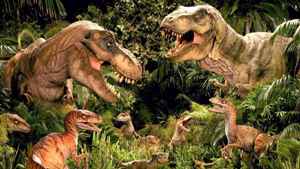
Long regarded as a classic, Jurassic Park was revived by Jurassic World, which provided yet another example of well-intended mistakes.
The movie Jurassic Park, a different version of modern-day Earth, depicts scientists utilizing dinosaur DNA discovered in a mosquito preserved in amber to rebuild several dinosaur species that had previously gone extinct.
As they experiment with fusing the genomes of various species, Jurassic World stresses the genetic engineering component of bringing the dinosaurs to life even more.
The genetic composition of a T-Rex is used to produce the Indominus Rex, a brand-new species, along with DNA from the Velociraptor, Giganotosaurus, cuttlefish, tree frogs, vipers, and other creatures.
Consequently, a dinosaur emerges with skills that the scientists could not foresee and entirely escapes human control to destroy the park and everything in it.
Deadpool (2016)

Everyone’s favorite anti-hero, Deadpool, spends the whole movie trying to get revenge on the guy who subjected him and many others to experiments to produce—you guessed it—human superwarriors.
In this movie, a villain recruits “volunteers” who believe they will become super warriors after receiving a serum injection but are tortured until their bodies produce enough adrenaline to activate the serum.
Wade Wilson, the movie’s main character, has undergone alteration that presents faster healing, giving him immortality. His body can even evacuate bullets that have punctured his head, and his limbs can regrow.
This movie explores the always fascinating idea that genetic engineering in humans may provide them with superpowers in the future.
Star Trek II: The Wrath of Khan (1982)

In his initial appearance (Episode 22 “Space Seed”), Khan Noonien Singh, one of the most adored antagonists in the Star Trek universe, is described as a byproduct of the selective breeding practices of the 20th century that sought to produce the “ideal human.”
Instead of getting along and improving the world, these “perfect” people jointly captured more than one-third of the planet and rose to the position of warlords, starting a global eugenic war.
The confrontations between Khan and Kirk in Season 1 of Star Trek highlight the worry that genetically modified humans may triumph over the rest of us unmodified Joes, despite only being the narrative for Khan’s initial appearance in that season.
This movie is perfect for you if you like vintage science fiction.
Star Wars: Episode II – Attack of the Clones (2002)

Given that it has been one of the most popular movie franchises, the Star Wars series probably doesn’t require an introduction.
However, you may not have realized that the main theme of Episode II: Attack of the Clones is genetic engineering. It becomes apparent that a dark entity of some kind has created a clone army to aid in the battle against a war they are attempting to start on a mostly tranquil planet.
In the movie, Ewan McGregor’s character Obi-Wan Kenobi finds a factory making clones.
The designer claims that even though they are shown as developing in womb-like structures, they are genetically altered to allow for faster development (in half the time of a typical human), complete submission, and less independence than the human they are after.
Conclusion
The line between science fiction and reality is becoming increasingly thin as our technological capabilities expand.
Movies like Gattaca, Jurassic Park, The Island, I Am Legend, and Blade Runner offer more than entertainment; they provide a speculative look at what our future could hold.
As genetic engineering continues to evolve, it is crucial to consider the ethical implications and strive for advancements that benefit humanity while avoiding the dystopian outcomes depicted in these films.