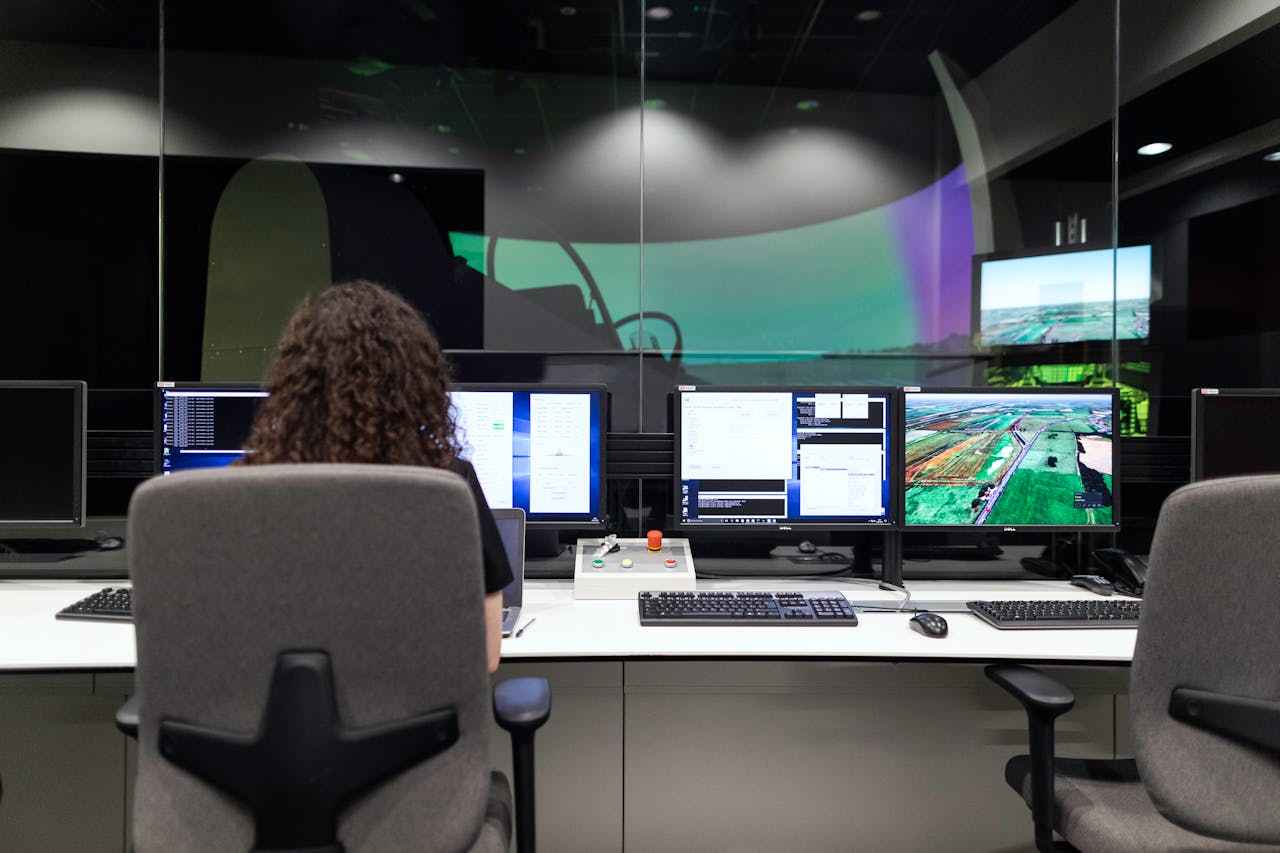
Technology has become a backbone of progress in almost every industry in today’s digital world including modernizing construction practices, streamlining logistics operations, and in almost each industry technology is transforming the major role as human work, build, connect, and serve to the business.
Most of the businesses are turning towards automation, software solutions, and smart devices to enhance efficiency in work, accuracy to deliver the result, and most important thing customer satisfaction.
Industries that were once slow to adapt the new technology, now industries are leading in the industry with the help of Software development for industries, real-time data of business, intelligent systems, as well as smooth digital tools.
The impact of technology is undeniable whether it is a fully automated hotel experience, or a smart warehouse, a connected construction site as well. In the competition world of business adapting the digital transformation is no longer optional for your business growth rather it is essential.
This guide discovers how technology is transforming the logistics, construction, IoT, and hospitality sectors in powerful and practical ways.
Let’s talk in detail.
Technology used in logistic industry:
The logistics industry has quickly adapted the technology to meet their goals with rising demands of efficiency, speed, and transparency too.
Automated Storage and Retrieval Systems restructure the warehouse operations with integration of different digital technology, robotic warehouses, and racking elements too.
This technology perfectly manages the space utilization for warehouse, improvement in accuracy, as well as boosts productivity with automated storage and retrieval processes.
The automation technology in logistic serves with potential benefits like enhancing in storage density, more efficiency, lower labor costs, and more safety.
The blockchain improves the transparency and lowers the fraud in global shipments, which allows for a more secure and traceable supply of products.
The use of real-time tracking by IoT sensors that offers the end-to-end visibility throughout the supply route. Major logistic companies uses the smart tracking devices which helps to monitor temperature, humidity, and shock to make sure about quality of product especially for pharmaceutical and food logistics products.
Transportation management systems by machine learning helping companies to manage the routes, monitor fuel usage, and keep track of delays.

Technologies in Internet of things:
The Internet of Things that is IoT refers to interconnected devices that collect and exchange data over the internet. It serves as the digital backbone for smarter operations across multiple industries.
IoT enhances fleet tracking and asset management in logistic industries. It ensures real-time monitoring of materials, equipment, and worker safety in construction industries. IoT drives personalized guest experiences including smart room controls and automated check-ins in hospitality sector.
IoT’s major benefits include real-time data collection, predictive maintenance, energy efficiency, and enhanced customer service. As more businesses adopt IoT, they gain actionable insights that drive smarter decision-making and operational excellence.
Technology innovation in construction:
Construction has traditionally been a slow adopter of technology, but the tide is turning. Modern construction sites are becoming smarter and safer with the help of tools such as building information modelling, IoT sensors, drones, and project management software.
Building information modelling allows detailed digital representations of buildings, helping architects, engineers, and contractors collaborate more efficiently. Which allows for early detection of design flaws, ultimately saving time and reducing waste.
IoT sensors, embedded in machinery and structural components, monitor conditions in real time ensuring safety and providing predictive maintenance alerts.
Drones are now commonly used for site surveys, reducing the requirements of manual inspections and offering accurate aerial data quickly and safely. This not only speeds up planning but also enhances on-site monitoring.
The project management platforms offer centralized dashboards for tracking timelines, budgets, and workforce allocation minimizing delays and boosting productivity.
Technology in hospitality:
The hospitality industry is adapting the new wave of digital transformation to elevate the guest experience and managing the operations.
Digital check-ins and mobile keys are now standard in many hotels, offering guests a seamless entry without ever stopping at the front desk. Smart room technologies allow guests to control lighting, temperature, and entertainment systems with voice commands or mobile apps.
Property management systems automate everything from booking to housekeeping schedules, reducing labor costs and improving service delivery.
Restaurants are getting a tech makeover. From QR code menus and digital ordering stands to inventory system supported by AI-powered, technology allows to speed up the service and better resource planning.
Emerging trends like robotic room service, personalization, and augmented reality for virtual tours are not only improving guest satisfaction but also providing a competitive edge for forward-thinking brands.
Conclusion:
Technology is continuously restructuring the industries make them faster, smarter, and more customer-focused. In logistics, it is improving delivery accuracy and cost-efficiency in construction, it is speeding up timelines while enhancing safety. IoT is creating powerful connections between machines, systems, and people, enabling real-time decisions and predictive insights.
The hospitality industry is seeing growth in guest satisfaction through digital tools and automation. These advancements are not just about convenience they are reshaping entire business models. Companies that embrace these technologies are staying competitive and future-ready. As digital transformation continues, access to expert development teams becomes critical. Discover how Colombian Nearshoring can power your tech transformation.