The modern manufacturing world moves quickly. Companies want stronger parts, lighter materials, and reliable performance. One method continues to stand out for its precision and flexibility: Investment Casting. Although the technique dates back thousands of years, recent developments in materials, automation, and digital simulation have transformed it into a highly advanced production process.
Today, investment casting is used across aerospace, medical devices, energy, and automotive sectors. These industries rely on accuracy measured in microns and require consistent part quality. Understanding how the process works shows why it remains one of the most dependable ways to produce complex metal components.
What Investment Casting Really Means Today
Investment casting begins with a wax model. This model is an exact copy of the final metal part. The idea is simple: create a perfect pattern first, then replace the wax with molten metal. What makes the modern process stand out is the strict control applied at every step and the use of digital tools to reduce errors.
Today’s wax formulations are refined to ensure smooth surfaces and stable shapes. Some manufacturers now use 3D-printed wax patterns to speed up development and achieve tighter tolerances. This shift has greatly reduced trial-and-error work, allowing companies to move from design to production much faster.
The process also supports metals like stainless steel, titanium, cobalt-chrome, and superalloys used in jet engines. This flexibility makes investment casting ideal for producing high-performance parts with complex internal channels and fine details.
Creating the Wax Pattern: The Start of Precision
The first step is the creation of the wax pattern. The mould used to form these wax shapes must be accurate and uniform. Modern CNC machining ensures that moulds meet sharp dimensional requirements, reducing the need for rework.
Once the mould is ready, technicians inject molten wax into it. After cooling, the wax pattern is removed and inspected. Even tiny flaws are corrected early because any imperfection in the wax will appear in the final metal part.
Many manufacturers now use automated wax-injection machines. These systems apply consistent pressure and temperature, resulting in uniform patterns and reducing human intervention. As demand grows for lightweight components with complex geometries, more companies are adopting 3D-printed patterns. This approach has rapidly increased design freedom and reduced tooling costs.
Building the Ceramic Shell: Strength from Layers
After the wax pattern is formed, it is coated with ceramic material. This creates the shell that will eventually hold the molten metal. The shell must withstand extremely high temperatures, especially when dealing with advanced alloys used in turbines and aerospace parts.
The coating process is done in stages. First, the wax pattern is dipped into a ceramic slurry. Then it is covered with fine sand. Once dry, this process is repeated several times with different grain sizes. Each layer adds strength. Recent improvements in ceramic materials have increased shell durability, allowing for thinner shells that reduce overall casting weight and improve cooling rates.
Robotic dipping arms are another modern upgrade. They help maintain consistency and reduce labour time. Factories use climate-controlled rooms to ensure each layer dries at the correct rate, improving shell quality and reducing cracks.
Removing the Wax: A Clean and Controlled Step
After the shell is complete, the wax must be removed. This is usually done using a steam autoclave. The heat melts the wax and allows it to flow out cleanly. The shell is then fired in a high-temperature furnace. Firing strengthens the ceramic material and prepares it for the metal pouring stage.
Recent updates in wax-recycling systems allow companies to recover a large percentage of the wax removed during this stage. This reduces waste and helps make the process more sustainable. For industries working toward lower environmental impact, this is a valuable improvement.
Pouring the Metal: Turning Patterns into Parts
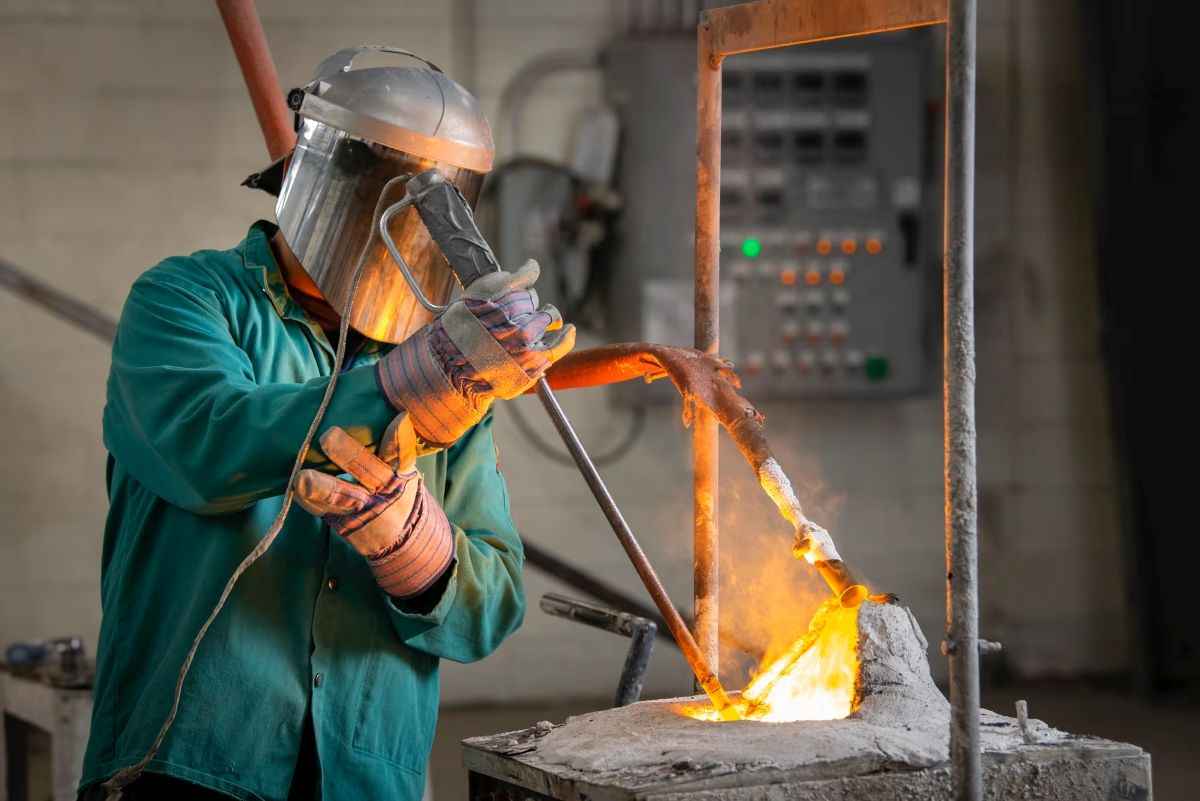
Once the shell is ready, molten metal is poured into it. This is the moment where precision matters most. The temperature of the metal, the pouring speed, and the mould design all influence the final result.
Induction furnaces and digital temperature controls now ensure stable and accurate metal temperatures. This reduces defects such as air pockets or incomplete fillings. Companies working with superalloys use vacuum or inert-gas environments to improve metal purity and performance.
After the metal cools and solidifies, the ceramic shell is broken away. What remains is a metal replica of the original wax pattern. It carries all the fine details and shapes created earlier in the process.
Finishing and Inspection: Ensuring Every Detail Counts
Once the shell is removed, the casting undergoes several finishing steps. These may include grinding, sandblasting, machining, or polishing. For high-precision industries, even small adjustments can make a major difference.
Inspection methods have also become more advanced. Techniques such as 3D scanning, digital X-ray imaging, and coordinate measuring machines (CMMs) help detect internal and external flaws quickly. These tools ensure each component meets strict industry standards before shipping.
Additive manufacturing has also influenced the finishing stage. By combining 3D-printed wax patterns with investment casting, companies minimise post-processing because the original design is already highly accurate.
Why Investment Casting Remains Important Today
Investment casting continues to grow in relevance because modern industries need complex, lightweight, and strong components. Unlike machining, which removes material, casting produces near-net-shape parts that waste much less metal. This makes the process cost-efficient for both small batches and large-volume production.
Electric vehicle manufacturers use investment casting for battery and motor components. Aerospace companies rely on it for turbine blades and structural parts. Medical companies depend on it for implants that must meet strict biocompatibility standards.
The combination of design freedom, material variety, and high surface quality keeps the method ahead of many alternatives.
Final Thoughts
From simple wax patterns to advanced metal components, Investment Casting has evolved into a modern and highly reliable manufacturing process. With improvements in automation, 3D printing, digital inspection, and ceramic materials, the technique continues to deliver exceptional results.
Whether used in engines, medical devices, or renewable energy, investment casting offers accuracy, consistency, and performance. As industries push for better and more efficient solutions, this process is set to remain a crucial part of global manufacturing.