It could be that the northern lights will be seen tonight and tomorrow night in some sections of the country. The National Oceanic and Atmospheric Administration (NOAA) Space Weather Prediction center has issued a minor G-1 level geomagnetic storm warning today since the magnetic field of the Earth is linked to that of the Sun, and therefore the solar wind had a clear pathway into our magnetosphere.
Geomagnetic activity with a maximum forecast rating of four out of a total possible nine with 6:00 p.m. – 6:00 a.m. U.S. Central Time the aurora borealis should be visible in some of the northernmost states closest to the border with Canada.
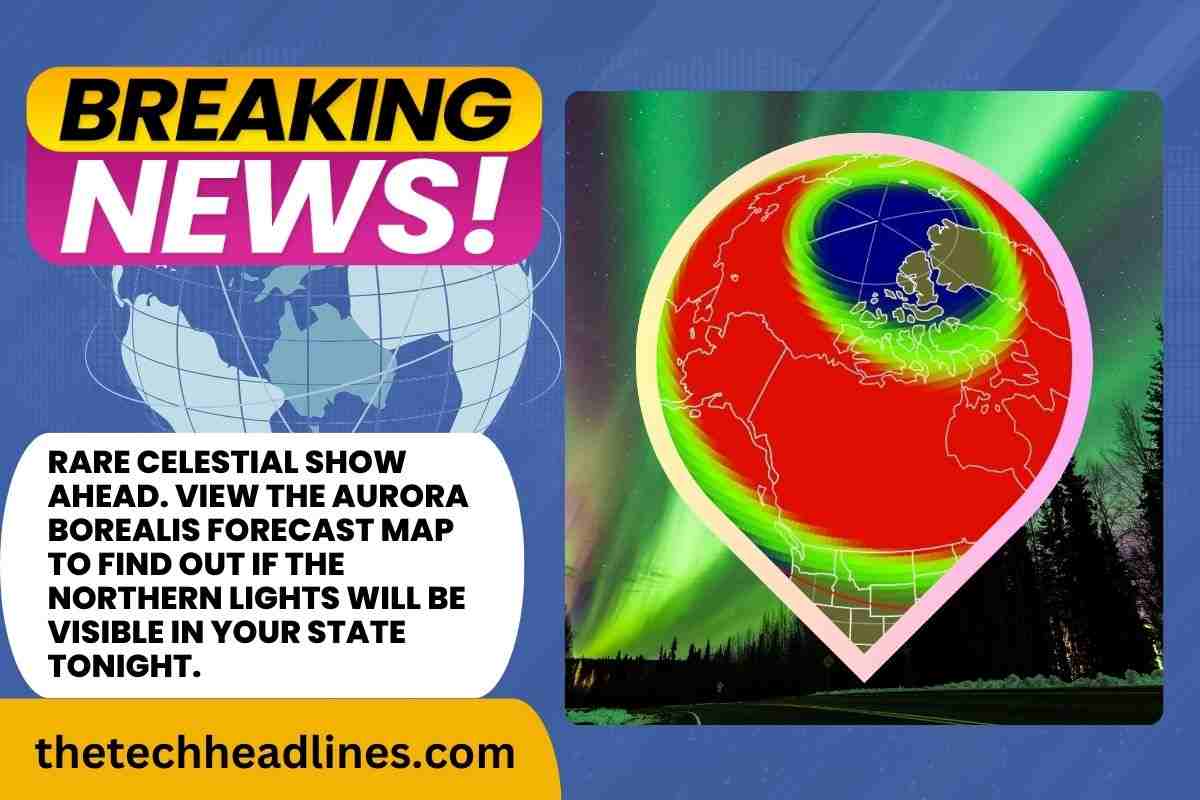
NOAA provides a map that indicates view-lines of the aurora on a particular night, namely, April 19, 2016, and the next day, April 20, 2016.
It is anticipated that the light show will cover: Idaho, Maine, Michigan, Minnesota, Montana, New York, North Dakota, South Dakota, Vermont, Washington, Wisconsin and Wyoming. The following night, only Minnesota, Montana and North Dakota will probably see the lights.
The dark green area on the map indicates all the locations where the aurora will occur in the sky above the head. The red spots indicate the areas where the aurora is to be highly vivid.
The Northern Lights cannot be seen during the day but are best observed sometime after sunset or just before sunrise. It can be seen as far as 621 miles in the event that the sky conditions are favorable.
The Northern Lights are only visible in the dark, away from city lights. The brightness of the aurora may even be reduced by moonlight. Weather and pollution can also adversely affect your view of the aurora, such as rain or clouds.
Although it is possible even in large cities to see a strong aurora, the best in the northern hemisphere will be those with a clear horizon to the North because the auroras might seem to be nearer to the horizon.
Even though the demonstrations of the aura can continue through the night, they are usually comparatively short and may be enhanced or diminished with time. Auroras are sometimes visible as early as they get during sunset and extend into the morning till the sun rises, although in most cases, the strong events occur around midnight.
On the NASA Aurora – 30 Minute Forecast page, the area is a short-term prediction (approximately 30 minutes) and the preceding 24 hours of activity.

Aurora Borealis Forecast: Map shows states where northern lights could be visible tonight